Iran ends the American Middle East: analysis
‘Trump’s debacle in Iran has shattered the illusion of American military omnipotence’
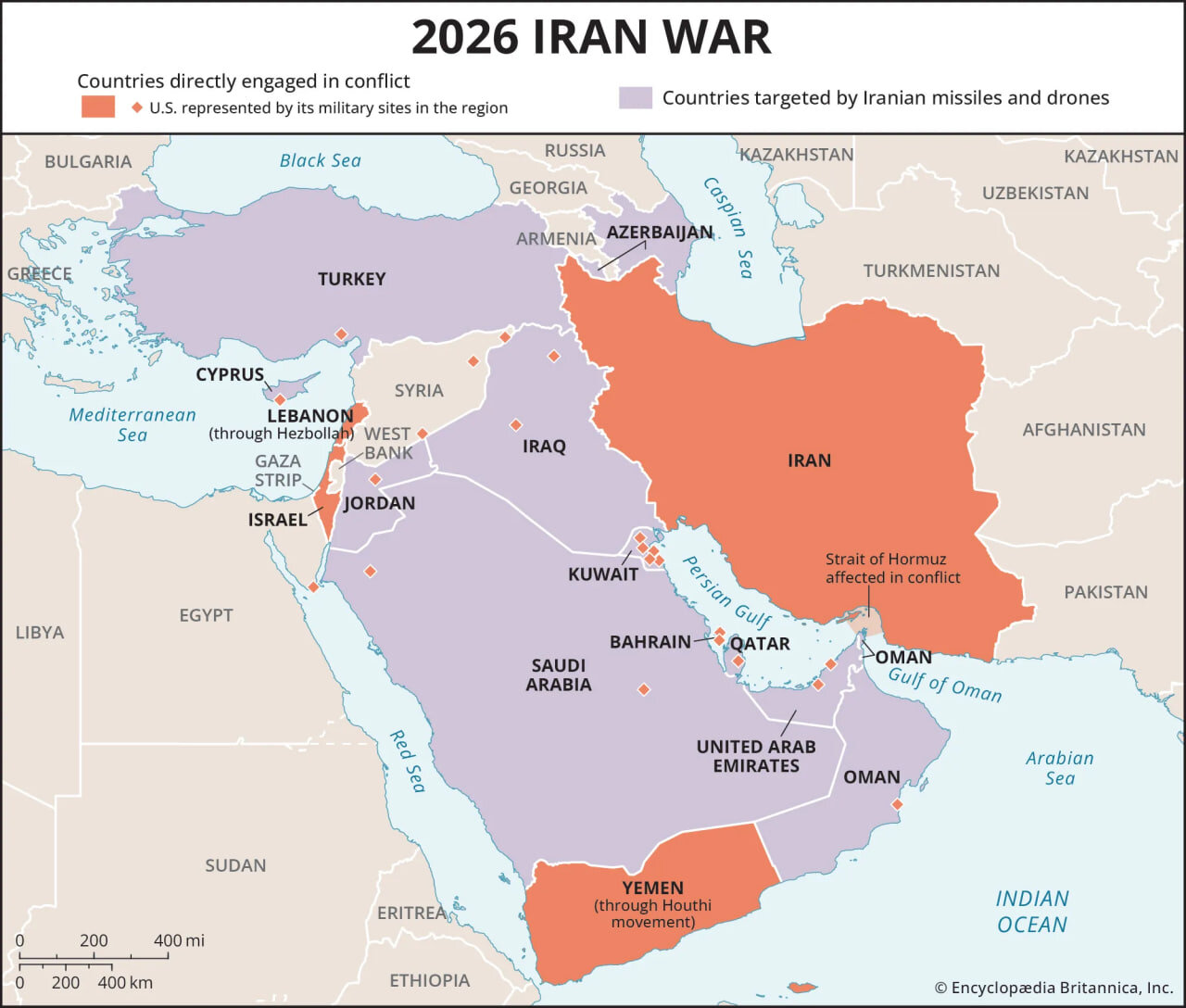
TEHRAN - Marc Lynch, a professor of political science and international affairs at George Washington University, says the failed U.S.-Israeli war on Iran has put an end to “the American Middle East.”
Writing an article in Foreign Affairs, Lynch says, “If the war in Gaza left the future of American regional leadership in doubt, the war with Iran was confirmation of the end of the order.”
He adds, “Events together have dealt a death blow to the American Middle East.”
“Trump’s debacle in Iran has shattered the illusion of American military omnipotence,” says Lynch, the author of America’s Middle East: The Ruination of a Region.
The following is a shortened version of the article titled “The End of the American Middle East”:
The American Middle East is finished. The regional order that has prevailed since 1991 has been one of the many casualties of the U.S.-Israeli war with Iran. The American and Israeli failure to dislodge the ruling system in Tehran has proved the bankruptcy of decades of sanctions and violence. The inability of the United States to protect its Persian Gulf allies from Iranian attacks or to keep the Strait of Hormuz open has fatally undermined the core security bargain that justified its network of military bases in the region. And Israel’s increasingly threatening posture and abandonment of any pretense of interest in reaching an accommodation with the Palestinians have ended Washington’s decades-long mission of bringing its Arab allies and Israel together into an enduring security partnership.
The United States’ primary goal for three and a half decades has been to lock its disparate allies into an order built around protecting Israel while containing, at first, Iran and Iraq, and more recently Iran and its nonstate allies. Far from being a deviation from that strategy, President Donald Trump’s war took it to its logical end, seeking to undermine Iran by force in one fell swoop. As American leaders did before the 2003 invasion of Iraq and Israel has done in its wars against Hezbollah and Hamas, the architects of this war vastly exaggerated what military power could achieve, underestimated the capacity of adversaries to adapt, took for granted that allies would fall in line. Washington’s misadventure was not an aberration so much as the ultimate expression of the inherent vice of its Middle East strategy.
At first, it may not look as though the war has had much effect on the alliances that form the American order. Facing an inconclusive war and an empowered Iran, the Persian Gulf states may ramp up their arms purchases and their demands for renewed security guarantees, creating the illusion of continuity. But the old order is in fact giving way to something new. The 1956 Suez crisis is remembered today as the last gasp of British and French imperial power in the Middle East, but it took years to reach that inevitable end. American primacy will not disappear immediately, either, but long-building doubts about American power and purpose have passed their tipping point. The revelations of the Iran war and of the Israeli war in Gaza before it have already changed the calculations of U.S. allies and adversaries. Another round of fighting or the election of a different American president will not repair the rupture.
The years ahead promise further discord.
Israel hopes to expand its de facto borders, including by annexing as much as possible of historic Palestine, and to impose its writ by force across vast swaths of the region. And assuming that the Iranian government does not collapse any time soon—which it appears highly unlikely to do—an emboldened Tehran will hope to defend and expand its regional influence by bogging Washington down in the kinds of endless, borderless “gray zone” conflicts in which it has always thrived.
If the United States is finally willing to abandon its failed strategy, however, the collapse of one order could still be an opportunity to build a new and better one. The conditions, admittedly, are far from ideal. Although most of the region’s leaders and publics desperately want a respite from military strikes and economic disruption, they also deeply resent Washington for dragging them into a disaster. But discarding its policy of support for autocrats, impunity for allies, and militarized containment of enemies might enable the United States to engage with the region in a healthier way—one that eventually could yield the durable stability Washington has claimed to want all along.
For many decades after World War II, American ambitions in the Middle East were defined by its global competition with the Soviet Union, which gave Washington an outsize interest in regional politics but made it wary of overt military intervention. The current Middle East order, established by the George H. W. Bush administration after the collapse of the Soviet Union and the liberation of Kuwait from Iraqi occupation in the Persian Gulf War of 1990–91, has been defined by American primacy. Presented with a historic opportunity to secure uncontested dominance over a long-contested region, Washington made itself indispensable by setting up military bases and security arrangements to contain Iraq and Iran. Its military and political support underpinned the survival of nearly every regime in the region.
To legitimize its role as something more than predatory domination, Washington launched the Arab-Israeli peace process in hopes of integrating its Arab allies and Israel into a common security framework. The result was a region divided between an American-led bloc that included Israel, Turkey, and almost every Arab state, and an opposing, less formal bloc that included Iran, Syria under the Assad dynasty, and nonstate actors such as Hamas, Hezbollah, and the Houthis. This structure remained remarkably unchanged through three decades of dramatic changes in global, regional, and American politics.
In the American telling, this order has provided a degree of stability while protecting core U.S. interests such as the oil trade and Israeli security. And in many ways, that has been true. Israel has not faced a state-level threat or fought a war against a peer competitor since 1973, which perhaps led it to underestimate the challenge of attacking Iran. Arab countries have worked with Israel against their common enemies despite the lack of a just solution to the Israeli-Palestinian conflict. For the most part, oil has flowed consistently at reasonable prices. No rival great power has seriously challenged American primacy—not even China, which has been content to sit back and take advantage of the economic opportunities made possible by the American provision of security.
For most people, the U.S. order meant only violence and deprivation.
For Washington, the strategic benefits accrued from this order seemed to justify the costs of the wars required to sustain it. But the price was much higher for those who live in the region. The past 35 years have seen Israel enter numerous smaller wars against its much weaker neighbors, the Israeli-Palestinian peace process completely fall apart, Hamas attack Israel on October 7, and Israel subsequently embark on the destruction of Gaza. In Iraq, the United States inflicted a dozen years of punishing sanctions, intermittent bombing, and failed regime change and counterproliferation efforts, followed by the disastrous 2003 invasion and occupation, all at tremendous human cost. Under American stewardship, catastrophic wars have shattered Lebanon, Libya, Sudan, Syria, and Yemen.
The regional order rested on American security guarantees not only to Arab states but also, critically, to the autocrats who sat atop them. For a brief moment during the 2010–11 Arab uprisings, the drive for change seemed unstoppable, but otherwise the arrangement worked. Nearly all regimes within the American alliance system held on to power; most tightened their grip in the protests’ wake. American support for neoliberal economic reforms encouraged those regimes to pursue privatization schemes that turbocharged elite corruption while impoverishing the majority of the population. Although the wealthy Persian Gulf oil states and small slivers of Arab elites flourished within this system, for most people the American order meant only violence, hopelessness, and deprivation. By nearly every economic, political, and developmental indicator, the Middle East under American domination has performed far worse than any other region.
Ironically, American security guarantees encouraged allies to disregard Washington’s policy interests. Most felt safe from external invasion or attack, creating a moral hazard: they could pursue their own ideological and political projects without fear of meaningful consequences. Washington’s preoccupation with its own domestic politics, inattention to the region’s nuances, and inflated fears of Chinese and Russian advances all made the United States an easy mark for manipulative local powers. As a result, it repeatedly failed over the decades to meaningfully restrain Israel or to prevent Arab allies from adopting policies that undermined stated U.S. goals. Those ostensible allies shrugged off criticism of their destructive interventions in Libya, Sudan, Syria, and Yemen. Nearly all actively opposed the 2015 nuclear agreement with Iran, which the Obama administration hoped would help stabilize the region. And in 2017, the blockade of Qatar led by the United Arab Emirates (UAE) and Saudi Arabia badly undermined the united front against Iran that Trump’s “maximum pressure” campaign required.
The 2010–11 uprisings pushed Arab governments into new forms of interventionism, in part because they lost confidence in the United States’ ability and willingness to respond to what they considered to be urgent threats. Autocratic allies that already feared potential coups and popular revolts now saw them as imminent realities as they faced down challenges from Islamist and jihadist movements, and young liberal democratic activists. Watching the lightning-fast spread of the protests, these regimes learned that the threat at home could begin anywhere, even beyond their borders. And when they saw the overthrow of Egypt’s Hosni Mubarak in 2011, they concluded that they could not count on the United States to save them from internal challenges. If they wanted to ensure their own survival, they would have to go out and contain the danger themselves. Their meddling repeatedly yielded devastating outcomes, however, contributing to a military coup in Egypt and several civil wars.
Israel enjoyed the most ironclad of American security guarantees. Although it is a democracy, at least for Jewish citizens, the country’s prime ministers have often fallen into a trap akin to the one ensnaring the United States’ autocratic allies. Israel’s military superiority and confidence in American support enabled its leaders to prioritize maintaining their governing coalitions and fending off domestic political threats over seriously addressing the Palestinian issue or easing regional instability. But when the October 7 attacks shattered that complacency, Israel’s response was to go all-in on military escalation. It displayed ever greater excess in its use of force across the region and entrenched its military occupation in the Gaza Strip, in the West Bank, and even in parts of Lebanon and Syria.
Part of the reason the American order lasted as long as it did was that the security bargains at its core were never truly tested. The region’s leaders complained endlessly of feeling abandoned but never behaved as if abandonment were a significant possibility. For years, interstate war was not a particularly salient threat, either. Israel bombed Gaza and Lebanon with some frequency, but no Arab state aligned with the United States was overly worried about an Israeli attack. Iran loomed larger among their concerns, but even a direct Iranian attack seemed extremely unlikely.
At the same time, the United States was trying to institutionalize its Middle East order by brokering open military and political cooperation between its Arab allies and Israel. The goal was not new. Fostering an anti-Iranian coalition under American leadership had been an objective of every American government since 1991. Trump diverged from his predecessors, however, in pushing it forward without tying steps toward Arab-Israeli normalization to progress on the Palestinian issue. In 2020, his administration brokered the Abraham Accords between Israel and, originally, Bahrain and the UAE. Morocco joined soon after, and Sudan signed an initial agreement that has not been formalized. But when the Biden administration tried to cajole Saudi Arabia into signing on, it misjudged the importance of the Palestinian cause to the Saudi public and the rising competitiveness between Riyadh and Abu Dhabi. It failed to see the growing popular hostility to normalization—or to anticipate the looming catastrophe in Gaza.
The United States’ regional order has been shaken up before, including during the disastrous 2003 invasion of Iraq and the popular uprisings of 2011, but it has always reconstituted itself. U.S. policymakers were as trapped by the structure they designed as were the regional powers embedded in it. Every president since Bill Clinton came to office vowing to reduce American involvement in the Middle East, and every president has found himself dragged back into the same policies and the same wars.
The dual crisis of Israel’s destruction of Gaza and the U.S.-Israeli war in Iran may seem like just another episode in this cycle. But in truth, these events together have dealt a death blow to the American Middle East. American support for Israel’s assault on Gaza, particularly under President Joe Biden, swept away any residual moral authority the United States could claim. Trump’s debacle in Iran has shattered the illusion of American military omnipotence. Both incidents have demonstrated to Arab states their lack of meaningful influence within the regional order and the diminishing returns of American security guarantees.
American officials under Biden and Trump failed to appreciate the seismic effects of the Israeli war in Gaza. They shared a view that regional leaders’ opinions were the only ones that mattered, that those leaders had long forgotten about the Palestinians, and that they were eager for closer relations with a capable Israel and for the stronger security guarantees the United States offered as incentives. Few things better exemplified this myopia than Biden’s quixotic pursuit of brokering a normalization of relations between Israel and Saudi Arabia even after the rising death toll in Gaza had rendered such cooperation politically toxic among the Arab publics that Riyadh aspired to lead.
Washington’s unceasing push for Arab cooperation with Israel created further divides. As one of the first two signatories of the Abraham Accords, the UAE continued working with Israel during the Israeli campaign in Gaza and as Israel carried out military strikes in Iraq, Lebanon, Syria, Yemen, and even Qatar. During the war with Iran, according to The Wall Street Journal, the UAE has coordinated with Israel and the United States to launch strikes on Iranian targets. Saudi Arabia, meanwhile, has watched the Emirati-Israeli alignment with unease. Riyadh and Abu Dhabi were already at loggerheads over Syria, with Saudi Arabia backing the post-Assad regime and the UAE sharing Israel’s hostility to it, and Yemen, where Saudi Arabia had just driven out Emirati proxies. Saudi Arabia complained that the UAE was promoting secessionist movements that undermined regional stability, and it broadly saw a partnership between Israel and the UAE as a threat to its own regional leadership. The rift greatly complicated any chance Washington may have had of lining up the region’s heavyweights behind its campaign to defeat Iran.
If the war in Gaza left the future of American regional leadership in doubt, the war with Iran was confirmation of the end of the order. Persian Gulf leaders were furious that the United States and Israel started the war without consulting them, while knowing they opposed it, and in the middle of Omani-brokered negotiations with Iran. Within a few weeks, Iran managed to damage, destroy, or render irrelevant large parts of the archipelago of American military bases in these countries that had underwritten American primacy in the Middle East.
Persian Gulf allies’ confidence in Washington eroded further when the U.S.-Israeli campaign proved unable to dislodge the Iranian regime. For decades, advocates of bombing Iran argued that such an attack might be messy but would ultimately weaken Iran. Yet the United States and Israel, with all their military might, simply failed. On top of that, the United States sat by helplessly as Iran closed the Strait of Hormuz, endangering the entire Persian Gulf economy. Once again, Persian Gulf leaders were shocked not just by American disregard for their preferences but also by the revelation of American impotence. And their shock turned to anger when the United States bombed Iranian water storage facilities and Israel struck Iranian oil depots. Washington was gambling with its partners’ futures; had Tehran responded by striking Persian Gulf water facilities or nuclear power sites, the resulting cycle of escalation could have ended with Persian Gulf states’ facing economic catastrophe and enough environmental destruction to render them uninhabitable.
What the Persian Gulf took away from all this was that American security guarantees, the heart of the regional bargain, were no longer reliable. The region had already learned in 2011 that Washington could not protect it from domestic threats. If Washington could not even be counted on to consult its allies, defeat its adversaries, or protect its partners from the fallout of its regional misadventures, then what good were its promises? The fundamental bargain the United States offered has crumbled, and it will not be easily rebuilt.
It has become commonplace to refer to the Iran war as Washington’s Suez moment. There are indeed similarities between today’s catastrophe and the failed British-French-Israeli scheme to take the Suez Canal from Egypt in 1956, which delivered a stunning political victory to Egyptian President Gamal Abdel Nasser. Suez became a shorthand for the demise of the European empires and the passage from a multipolar world to the bipolar Cold War–era system.
By the time of the Suez crisis, the dissolution of the European empires was inevitable—not because of one policy fiasco, but because of the rise of nationalism and anticolonialism as well as the economic and political exhaustion of the European imperial model. The United States’ Middle East order, too, had been decaying for years as policy and political failures accumulated, culminating in the loss of shared purpose and the military impotence revealed by the latest crises.
Washington will be tempted to stand by the policies that have defined its Middle East approach for decades, leaning on its relationships with the brutal, insecure, and repressive leaders who populate the landscape it designed. If American leaders stick to the same path, they should expect the same result: a region beset by constant instability, economic and political failure, and repeated eruptions of violent conflict. These conflicts may only occasionally draw in American military forces, but the chaos will consistently demand attention and pointlessly consume resources. The forever wars will continue.
That outcome may seem acceptable to American policymakers who have become accustomed to managing conflicts and maintaining relationships with bad actors. But Washington cannot stave off a transition to a new regional order by simply pretending that nothing has changed. Arab allies that have lost faith in the United States will increasingly exercise their autonomy. At times, that could mean pursuing diplomacy with Iran and expanding relations with China and Russia against American wishes. At others, it might mean meddling in Libya, Sudan, and the Horn of Africa or reigniting violent conflict in Iraq, Lebanon, Syria, and Yemen.
Forces largely beyond American control will shape this emergent order. For one, Israel is determined to carry on with military interventionism regardless of American preferences. It continued its war with Hezbollah in defiance of the U.S.-Iranian memorandum of understanding reached in June, and it indicated no willingness to withdraw its military from southern Lebanon. Israeli officials insist that the country will maintain a troop presence in Syria as well. And with no serious domestic pressure to adopt more dovish policies, there is little standing in the way of Israel’s annexation of the West Bank and its complete destruction of Gaza.
Although suffering from the war, Iran remains intact, and its regional power has grown. Iran has demonstrated its ability to effectively control the Strait of Hormuz and to strike American allies in the region. American pressure on weak governments in Iraq and Lebanon to disarm pro-Iranian militias could trigger additional conflict in which Iranian allies would hold the upper hand.
Regional alignments will drift further away from the anti-Iranian coalition that American officials envision. Instead of relying on American protection, many Persian Gulf states could pursue side deals with Iran to keep themselves off Tehran’s target list. And instead of following Washington’s lead, regional politics will likely revolve around a deepening competition for primacy between the Emiratis and the Saudis. Before the Iran war began at the end of February, Riyadh had started to mobilize a coalition that included Egypt, Pakistan, Qatar, and Turkey to counter the U.S.-backed Emirati-Israeli alliance. This contest will resume after the fighting simmers down, likely destabilizing already beleaguered states, stretching across the wider region, and generating endless new crises that a distracted Washington will struggle to navigate.
Finally, most regimes will face ever greater pressures from below as the fallout of the Iran war ripples through the region’s struggling economies. It is not only countries whose infrastructure has been affected by the Iran war. In Egypt, for example, steep hikes in fuel and food prices and enormous losses of Suez Canal revenues as the war disrupts global shipping are compounding existing fiscal and unemployment crises. Many countries already hurt by cuts in U.S. aid may lose another critical source of external investment as the wealthy Persian Gulf states grapple with their own economic problems. Domestic grievances and outrage over Gaza make for a potent mix, and a wave of protest comparable to the uprisings of 15 years ago could again be on the horizon.
The Iran fiasco has thoroughly exposed the hollowness of hawkish calls for war and promises of decisive action. It is time for Washington to commit to a diplomatic process that can bring Iran into the regional security system as an invested partner. The Persian Gulf states may be open to such an approach; after all, Saudi Arabia and Iran reached a rapprochement in 2023. The Obama administration evoked a similar vision when it was negotiating the 2015 Iran nuclear deal, and even Vice President JD Vance has spoken of a willingness to “fundamentally transform” the U.S. relationship with Iran following a new agreement. The aspiration is there, but a new administration will have to demonstrate quickly and decisively that it intends to see it through.
Leave a Comment